2026 Medical scheme benefit and premium update hub

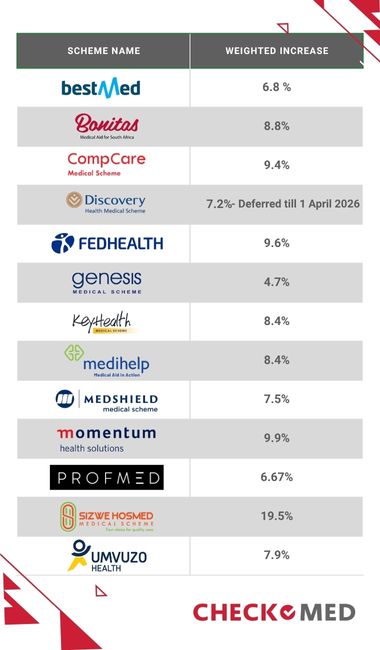
Each year, medical schemes review their benefits and contributions. These updates shape how much members pay, and what they receive in return, so taking a moment to understand what’s changing in 2026 can help you make smarter health cover decisions.

While increases still need regulatory approval, here’s a snapshot of confirmed updates and new benefits from South Africa’s leading medical schemes.

Bestmed

Bestmed has introduced an average benefit increase of 4.6% across all plans, along with several meaningful enhancements:

  • Preventative care: Faecal occult colon cancer screening is now available every 24 months for members over 40.
  • Surgical cover: Adenoidectomy for both adults and children has been added to the Rhythm 1 option, combined with tonsillectomy benefits.
  • Hearing devices: Cochlear implant and BAHA limits have been raised, up to R350,000 on Pace 4.
  • Breast reduction: Pace 3 and 4 now include a medically necessary breast reduction benefit, capped at R100,000.
  • Take-home medicine: Allowances for chronic and retail pharmacy take-home medication have been increased by at least 175%, now ranging from R450–R700.
  • Contraceptives: Female contraceptive benefits have been split into two clear limits: oral contraceptives (R2,092–R2,801) and IUDs (R3,295–R4,225).

Discovery Health

Discovery’s contribution increases will only apply from 1 April 2026, giving members a few extra months at current rates.

The Smart Saver range, launching 1 January 2026, brings a new combination of value and flexibility, including:

  • Up to 200% hospital cover on the Smart network.
  • A built-in Medical Savings Account.
  • A Personal Health Fund.
  • Unlimited Smart GP visits.
  • Dental, optical, and over-the-counter benefits.

Bonitas

Bonitas is focusing on younger members with its new BonCore plan, designed for individuals and couples aged 22–35. Benefits include:

  • Unlimited network hospital cover.
  • Unlimited virtual GP visits and 3 in-person consultations.
  • Cover for 28 chronic conditions.
  • A R1,000 Benefit Booster.
  • Preventative screenings.

The Primary Select plan has evolved into BonPrime, a savings plan with 16% allocated to savings, giving members more control over everyday costs.

Medihelp

Medihelp has two refreshed options stand out for 2026:

  • MedVital: Improved overall value across key benefits.
  • MedReach (previously MedElect): Now tailored for professionals seeking convenience and quality. Includes unlimited hospital cover, day-to-day benefits, and extended radiology, dental, and eye care coverage. The MedElect Student option has been discontinued.

Medshield

Medshield has a strong focus on screening and chronic care improvements this year:

  • AI Optical Diabetic Screening across all options except MediPhila and MediCurve.
  • Reduced chronic medicine co-payments on most plans.
  • Annual mammograms for women 30+ (previously every two years).
  • Dis-Chem has been added as a Designated Service Provider (DSP) for chronic medication.

Momentum Health

Momentum has introduced several preventive and accessibility upgrades:

  • FIT (Faecal Immunochemical Test): Now available annually for members aged 45–80 on all options except Ingwe.
  • Ingwe income brackets increased by 4.5% to make coverage more accessible.
  • Student/child principal rate: R645 per month.
  • Maternity benefit: Online antenatal and postnatal classes now hosted by ParentSense.
  • Dental cover: Preventative benefit raised to R500 per beneficiary.
  • Average co-payment increases of 4%.

Fedhealth

Fedhealth continues to expand coverage for women’s and mental health, as well as preventative care for seniors:

  • FlexiFED 1: Expanded maternity benefits, including more scans, consultations, and antenatal classes.
  • Mental health: Depression medication now covered even on entry-level plans.
  • Emergency contraception is now covered across all options.
  • Senior care: Pneumococcal vaccine added for members 65+.
  • Oncology: 25% higher brachytherapy limits on FlexiFED 4.
  • Day-to-Day Plus (D2D+): Rewards members who complete a health risk assessment and join Sanlam Health Rewards, unlocking up to R4,500 for additional day-to-day cover.

Compare your cover for 2026

Our updated comparison tool on CheckMed now reflects 2026 benefits and contributions across all major schemes. It’s designed to help you see what’s changing, and decide whether your current plan still meets your needs.

Start the new year with confidence. Compare your cover and see exactly what you’ll be getting in 2026.

Making sense of your medical aid review period

Just like every other year, in 2026, medical aid members all over South Africa will receive an updated set of benefits. Nearly all of these packs contain small, intricate changes that affect both your health and your wallet. Their fine print might be difficult to navigate, but here is some good news; understanding your review period for your medical aid does not have to be difficult. With the correct information, instead of making it stressful, this review period can be used to ensure that you are still receiving the best value for your money.

Why the review period matters

Think of the review period as your annual financial health check. It’s the moment when your medical aid scheme lays out what’s changing for the year ahead. Some changes will have little impact, while others could affect your household budget or even the doctor, you’re able to see.

Premium increases

The first thing most people notice is the higher monthly premium – a rise that’s almost inevitable, irrespective of any pay increase for the main member on the horizon.

Take this example: R200 a month may feel small, but over a year that’s R2,400. The real question is – does this extra cost add value to your future, or just drain your budget?

Benefit adjustments

Not all changes are bad news. Sometimes benefits improve, like more GP visits or higher allowances for specialist scans. Conversely, sometimes cover shrinks. Because of this, you’ll lose cover sooner and tiny changes end up accumulating. This is why you need to ensure that your plan suits your lifestyle and daily activities.

Provider network changes

This is one area where people often get caught off guard. You could find that your chosen clinic or MSP hospital is no longer in your plan’s network. When this happens, you might need to pay additional charges or change providers. Being informed of this enables you to prioritise what matters to you more, either continuing with your doctor or minimising expenses.

Out-of-pocket increases

Additional co-payments, new exclusions, or increased deductibles are all examples of concealed charges that can accumulate quietly over time. The problem is that you typically become aware of them during an emergency, when you do not expect to receive an additional bill. Fine-tuning your policy now can prevent those unpleasant surprises in the future.

Value-adds

Medical aid schemes love to talk about their “extras”: wellness apps, rewards programmes, or free preventative screenings. Some of these are genuinely useful, especially if they help you stay healthier for longer. Others might simply inflate your premiums without offering much day-to-day benefit. The key is to ask: Will I really use this?

Time to reassess

Your 2026 benefit pack isn’t just paperwork: it’s a signal to pause and check if your medical aid plan still matches your lifestyle, health needs, and budget. Don’t just accept the changes in your 2026 benefit pack. Compare your plan today with CheckMed and find the option that truly fits your health and budget needs.

What the medical aid review period means for you (and why it starts before November)

Every year around this time, something big happens in the world of medical aid, and it’s not just in November.

If you currently hold medical cover under an open medical aid scheme or are thinking of subscribing to one, the time between September and December is your months of opportunity. This is when medical scheme administrators begin updating existing schemes upwards in premiums, tweaking benefits, changing provider networks, and changing cover limits, all meant to be effective from the following January.

The knowledge of the annual review schedule stands to benefit your decision-making when determining health cover for 2026. Here follows some information for you to know.

What is the medical aid review period (and when does it start)?

The medical aid review period generally runs from late September through to December, although exact dates vary between schemes. Most of the major schemes begin releasing information in late September or early October, first to brokers and then to the public.

During this time, you’ll start seeing:

  • Premium (monthly contribution) changes
  • Updated benefit limits
  • Network provider adjustments
  • Revised co-payments or exclusions
  • New wellness tools or added-value services

While many refer to it as the “November review period,” the process typically kicks off from September, with more schemes revealing their updates as the weeks progress.

Why do these changes matter?

Your medical aid plan is not static and neither are your healthcare needs. Schemes revise their options annually to:

  • Keep pace with medical inflation and provider fee increases
  • Align with updated industry regulations
  • Adjust for changes in member claims and utilisation patterns
  • Introduce new digital tools or services for better member support

Staying informed about these updates is essential. A plan that served you well this year might not suit your needs or budget in 2026.

What to look out for during review season

When your scheme’s updates become available, pay close attention to:

  • Premium increases: What’s your new monthly cost?
  • Benefit adjustments: Are limits going up or down?
  • Provider network changes: Will your current doctor or hospital still be covered?
  • Out-of-pocket increases: Are there new co-payments or exclusions?
  • Value-adds: Are there any new wellness tools, apps or rewards?

Doing a medical aid comparison helps you weigh up your current plan against what’s newly available across different schemes and options, without necessarily switching funds.

Should you switch funds or just change options?

In most cases, switching to a different option within your current fund is the safer, easier route, especially if your needs have changed. Switching to a different scheme entirely can trigger new waiting periods or exclusions for certain conditions.

Unless there is a compelling reason, it’s usually better to stay within your existing medical aid and look at more suitable options under that umbrella.

How CheckMed can help

With dozens of schemes and hundreds of options available in South Africa, comparing medical aids can quickly become overwhelming. That’s where CheckMed comes in.

We track benefit updates and provide easy-to-understand comparisons, so you can see what fits your needs best, all in one place. Just note: not all premiums and benefits are available at once. Our updates are added as schemes release them, so check back often or speak to one of our consultants for real-time advice.

How to Prepare for the Review Period

Here are 4 simple steps:

  1. Review your current plan: Know what you are paying for, and which benefits you primarily use.
  2. Assess your healthcare needs: What has changed this year? Are there new diagnoses, dependants, or budget changes?
  3. Stay informed: Watch for communication from your scheme and follow any pertinent updates posted on CheckMed.
  4. Get expert guidance: Consult a specialist if you need clarification. An informed decision today saves frustration (and bills) later.

In conclusion

Updates aside, whether that will happen in September or October, being proactive is what truly matters. This review period presents the perfect opportunity to reassess, realign, and ensure that your medical aid covers your needs. In view of this, with such foresight and by utilising the right tools, you should be able to step into 2026 with a plan that fits just perfectly.

The Power of Prevention: How Women Can Take Full Advantage of Their Preventative Care Benefits

When it comes to women’s health, prevention is much more than peace of mind. It is a proactive measure to live well and stay well. Too often the benefits of preventive care are overlooked simply because we do not know that they exist.

But did you know that depending on your South African medical aid, you could have free or subsidised screenings, contraceptives and even maternity wellness services?

So how does preventative healthcare actually benefit you and how can you ensure that you are not missing out on benefits that your medical aid already pays for?

What preventative care is included in many medical aid plans

Preventative care benefits vary from plan to plan, but many South African medical aids include a core of free or subsidised services, either as part of Prescribed Minimum Benefits (PMBs) or specific scheme benefits.

These often include:

  • Annual PAP smears and mammograms (especially for women 40+)
  • HIV, cholesterol, and blood sugar screenings
  • Contraceptive cover — such as oral contraceptives, injectables, or IUDs
  • Childhood immunisations
  • Antenatal and postnatal care
  • Wellness screenings through pharmacies or scheme partners

While the exact details depend on your plan, most offer these preventative care services either from your risk benefit (not affecting your day-to-day savings) or as added value services. That means they often cost you nothing extra, you just need to use them.

Why using preventative benefits saves you more in the long run

These are carried out to help in the prevention of avoidable complications, which could be debilitating and costly. A routine PAP smear could catch the early signs of cervical cancer, and yearly breast exams may be able to detect abnormalities before they require invasive treatment. Likewise, checking blood pressure or glucose regularly is the best way to prevent future and far more severe complications such as stroke or diabetes.

By using these benefits early and consistently, you reduce your risk of:

  • Unexpected hospitalisations
  • Costly treatments down the line
  • Co-payments for avoidable chronic conditions

In other words, putting your health first today means fewer financial and emotional concerns tomorrow. It’s not merely about staying well; it’s about staying financially protected.

Maternity and contraception: What’s often included (and what’s not)

Preventative care becomes more pertinent if planning to have a baby or already expecting. Numerous medical funds offer separate maternity and contraceptive benefits designed to assist and accommodate you in every phase of your journey.

These may include:

  • Antenatal consultations (up to 6–12 visits)
  • Ultrasounds and blood tests
  • Newborn screenings
  • Access to 24/7 baby advice lines (like Bonitas’ Babyline)
  • Lactation consultants or milestone check-ups
  • Monthly allowances for antenatal supplements (e.g., R195/month for vitamins)
  • Contraceptive benefits, including hormonal options, implants, or IUDs

However, not all plans are created equal. Some cover these from the hospital benefit only, while others include dedicated maternity programmes, even on entry-level hospital plans. Always check the fine print.

How to find out what your plan includes

Understanding your preventative healthcare benefits starts with knowing where to look. Here’s how to make sure you’re in the know:

  • Log in to your member portal to view your benefits and remaining limits
  • Download the scheme’s benefit guide or brochure
  • Check if services are paid from your savings or the risk pool
  • Confirm which provider networks are covered
  • Ask if pre-authorisation is required for screenings or maternity care

If in doubt, speak directly to your medical aid or a broker who can walk you through your cover. Being informed means being empowered, especially when it comes to your health.

Prevention is powerful, and often already paid for

Your medical aid isn’t just a safety net – it’s a gateway to smarter, healthier living.  Preventative care covers a wide range of benefits, including contraceptives, cancer screenings, and maternity support.  Every woman’s health journey is unique and ever-changing – make sure you’re making the most of the benefits designed specifically for you.

So, next time you procrastinate when booking that check-up, or when reminders keep ringing for your respective screening, remember that prevention is not an option but a right.

Compare schemes now with CheckMed to find a plan that puts your health first. Let’s help you make the most of your preventative healthcare benefits, because your wellbeing is worth it.

The Importance of Regular Health Check-Ups and How Your Medical Aid Can Help

Health is wealth, and keeping it in check requires regular health check-ups. Prevention is better than cure, and some health-related benefits can help in timely intervention for better outcomes. Only when you take advantage of your medical aid will you be able to gain access to necessary health screenings and preventative care so that you and your loved ones can stay healthy.

Why Regular Health Check-Ups Matter

Having an appointment for a regular check-up is probably the best thing you can do to counteract any potential risk for your health. This is why:

  • Early disease detection: Many serious conditions such as diabetes, hypertension, and high cholesterol tend to progress silently. Regular screening such as blood sugar tests or cholesterol screening can bring early detection of these conditions and thereby effective and in some cases, life-saving treatment.
  • Better treatment outcomes: With early detection of diseases, it is usually easier and more effective to treat these conditions than later when more disease related symptoms and complications occur. Early diagnosis from screening may also increase the chances of survival while minimising high-cost treatments.
  • Cost savings: Preventive healthcare measures will save you lots of money in the long run. Use your medical aid benefits to treat chronic conditions while still manageable, therefore avoiding trips to the hospital and additional medication that can become very costly.

How Your Medical Aid Supports Preventative Care

The majority of medical aid schemes within South Africa offer very extensive preventive health care benefits. Depending on the medical aid scheme to which you belong, you could potentially benefit from a wide range of screening tests for adults, such as:

  • General health screenings: Annual general check-up, BMI checks, blood pressure checks
  • Cancer screenings: Mammograms, pap smears, prostate screenings
  • Vaccinations: Flu shots, childhood immunisations,
  • Chronic disease management: Regular check-ups and medication for conditions like diabetes and heart disease.
  • Dental and vision checks: Some plans offer free health check-ups for basic dental and eye care services.

If you are asking, “What health screenings are covered by medical aid?” consult your Scheme’s benefits guide or contact your medical aid administrator.

Making the Most of Your Medical Aid Benefits

Maximising your medical aid primary care benefits ensures you get the best possible care. Here’s how:

  • Schedule your annual medical aid check-up: Many medical aids cover annual medical aid check-ups, so take advantage of this benefit.
  • Use network providers: Medical aids often have preferred healthcare providers, helping you save costs.
  • Track your benefits: Stay informed about what preventative healthcare services are available under your plan.
  • Ask about additional wellness benefits: Some plans include wellness benefits medical aid programmes, which may cover nutrition consultations, gym memberships, or mental health services.

Invest in Your Health

Your health should always be a priority. Regular checkups and screening, plus preventive care, are ways to guarantee the best condition for the long haul. If you have already signed up for a medical aid South Africa plan, ensuring that you are fully utilising your benefits will be the wisest approach to take. If not, you should start comparing plans that could fit perfectly into your needs.

Find the Right Medical Aid Plan for You

This is the step that you should take today in preparation for a healthy tomorrow. Take advantage of every amazing benefit your medical aid has to offer. Put health screening on top of your priority list when it comes to preventive care for your well-being.

Medical aid loyalty programmes in South Africa: What you need to know

Medical aid loyalty programmes offer members a bit extra for the right behaviour. Usually, they incentivise their members for making healthier lifestyle choices. In consideration, medical scheme members receive discounts, cashbacks, and exclusive privileges based on their participation and engagement with the programme. If you’re looking for a medical aid loyalty programme in South Africa, this blog outlines what to expect from some of the top options that are out there.

How do medical aid loyalty programmes work?

Medical aid loyalty programmes in South Africa are essentially set to encourage and reward their members for healthier behaviours. Here’s a brief summary of how these programmes work:

  • Most work on a points basis. Members earn points by being active; for participating in health assessments; and by making healthy lifestyle choices.
  • Points can be redeemed for rewards at partner retailers, including gyms, cinemas, fuel stations, and even on flights and electricity purchases.
  • Many clients that take part in medical aid rewards programmes will have been allocated a status tier in the system (e.g. Discovery levels from Blue to Diamond) whereby the more points you earn; the higher your status, and the better your rewards.

Do I need to be a medical aid member to join a loyalty programme?

Not all medical aid loyalty programmes require you to be a medical aid member. Some can be accessed through other policies:

  • Discovery Vitality is offered to certain life insurance holders.
  • Momentum Multiply links with medical aid.
  • Eligibility changes for each product, so you should check whether yours qualifies.

Do loyalty programmes influence medical aid choices?

For many South Africans, the availability of medical aid rewards programmes can be a deciding factor when choosing a medical aid scheme. Some key considerations include:

  • Programmes like Discovery Vitality and Momentum Multiply provide significant rewards, making them attractive options.
  • Those who actively engage with these programmes may find the savings and medical aid loyalty programme benefits outweigh the costs.
  • Consumers looking for lifestyle and health incentives often prefer schemes that include robust medical aid rewards programmes.

Do loyalty programmes track physical activity and health screenings?

Yes, tracking health metrics is a core aspect of medical aid loyalty programmes. These programmes monitor:

  • Physical exercises by using mobile apps and wearable devices.
  • Health examination tests such as cholesterol, BMI and blood pressure assessments.
  • Personal lifestyle habits including the smoking status, hydration and possibly driving behaviour.

How can I redeem my loyalty points or benefits?

Redemption methods vary across programmes, but most include:

  • Discounts at affiliated shops, such as grocery stores, pharmacies, and clothes shops.
  • Cashbacks on health-related purchases and subscriptions like gym memberships and wellness goods.
  • Savings on flights, fuel, and even discounts on utility bills.

Do loyalty points expire?

While points themselves may not expire, status levels can drop if members do not maintain engagement. This means:

  • A decline in physical activity or health screenings may reduce the level of rewards earned.
  • Staying consistent with healthy behaviours ensures continued access to the best medical aid loyalty programme benefits.

Can I join a loyalty programme with a hospital plan only?

Yes, hospital plan members are typically eligible to participate in medical aid loyalty programmes. However, the specific medical aid loyalty programme benefits may differ from those available to comprehensive medical aid members.

Do these programmes offer free or subsidised health assessments?

  • Some medical aid loyalty programmes provide free online health assessments.
  • In-person health checks may be subsidised but are often included as part of preventative care benefits within the medical aid scheme.

What happens to my loyalty rewards if I cancel my medical aid?

  • When a loyalty programme is linked to a medical aid, cancelling such a scheme may lead to the loss of loyalty rewards.
  • Contrarily, in instances where the programme is engaged with another product, for instance, life cover, one may still retain membership and benefits.

What are the most popular medical aid loyalty programmes in South Africa?

Several well-known medical aid loyalty programmes operate in South Africa, including:

  • Discovery Vitality – One of the very large medical aid wellness programmes with which there’s a discount on gym membership, flight tickets, and groceries.
  • Momentum Multiply – Focuses on financial health wellness benefits through discounts and cashbacks awarded to members.
  • Sanlam Reality – Offers various tiers of membership, including discounts on lifestyle and financial products.

Final thoughts

Medical aid loyalty programmes in South Africa provide one-of-a-kind incentives for those choosing to adopt a healthier lifestyle. They certainly add that extra bit of flavour to your health care journey, but are not the only benefits to consider when selecting a medical aid scheme. Compare the various loyalty programmes with Checkmed.co.za before joining to ensure that you gain maximum benefit.

How to Maximise Your Medical Aid Benefits in 2025

With January, we welcome a time to take stock of your healthcare cover and try and get the best out of your medical aid scheme. Whether you are new to medical aid or simply seeking relief from the limitations of your current plan, understanding what your plan is for and how best to utilise it will help reduce costs and achieve better health results all year round. In this blog, we will take you through the key things that will help you get the most out of your medical aid plan benefits in 2025. The comparison tool CheckMed will also help you understand your current plan and other available plans in the market.

Do You Know What Your Plan Covers?

The first step in attaining maximum medical aid benefits is to understand what your medical aid plan entails. Most of the members tend to miss out on some benefits just because they do not know about them. There are important aspects to check:

  • Routine Check-ups: Most of the plans include annual wellness visits, which can serve as a measure to screen for health issues early.
  • Specialist Visits: Check if your health plan provides specialist visits if you need them.
  • Preventative Care Benefits: Most of the schemes will pay for screening examinations, flu shots, and immunisations.
  • Chronic Benefits: For chronic illness cases, ensure that your plan includes the drugs and interventions required.
  • Hospital Benefits: Find out what hospitalisation benefits are provided in your plan and also try to find out if there are any upper limits or co-payments.

In case you feel that your current plan is not sufficient to meet your medical needs, go ahead and use the free comparison tool at CheckMed to compare your cover with others. This tool enables you to evaluate and contrast the various plans available in the market in order to settle for the one that applies best to your health status, lifestyle and finances.

Do You Know About Your Preventative Care Benefits?

One of the most useful, yet commonly overlooked, aspects of medical aid plans is the preventive healthcare benefits. These services are meant to promote well-being and reduce the likelihood of any serious health conditions, by identifying and treating problems before they develop fully.

Benefits associated with preventative care encompass:

  • Screenings: Mammograms, pap smears, cholesterol checks, and more.
  • Vaccinations: Flu shots, COVID-19 vaccines, and travel vaccines.
  • Wellness Programs: Some plans, like Bonitas’ benefit booster or Discovery’s Wealth Fund, offer additional rewards for maintaining good health through regular screenings and wellness check-ins.

Utilising these benefits can improve your health as well as give you eligibility for various rewards and discounts. Don’t forget that some plans provide limited cover for preventive care services, so it is advisable to evaluate different plans in order to get one that meets your health requirements perfectly.

Visit CheckMed and use the free comparison to find out which plans give the best preventative care benefits in 2025.

The Importance of Staying Within Your Network of DSPs

The majority of medical aid benefits use a designated service provider (DSP) model. These are the medical facilities or providers such as doctors, specialists, hospitals and pharmacies that are contracted by your medical aid. It is very important to adhere to this network in order to avoid any out-of-pocket expenses that may be unplanned.

For example, most medical aids will request you to choose a GP who will be your Primary Health Care Provider. You may receive co-payments or additional fees if you access services outside the designated network. Understanding where the closest DSP facilities, including a hospital, general practitioner, dentist, and even pharmacy, is located can help in reducing costs throughout the year.

Planning to Bring a New Family Member Into the World? Plan Ahead

Adding to the family in 2025? Then it is important to ensure that your medical aid plan includes maternity cover. Do not however forget the terms and conditions, especially if you are already expectant – many medical aids operate on a 12-months maternity waiting period.

To maximise the maternity benefits you receive, consider these factors:

  • Pre- and Post-Natal Care: Check whether your plan includes medical consultations, scans and any other pregnancy-related tests, if any, through the course of your pregnancy.
  • Maternity Benefits: Find out about hospital services, expenses related to the delivery and other options covered by the plan like prenatal education, or care services after the delivery.
  • Co-payments and Excess Fees: Check if there other limits above which your medical scheme will not pay which need to be accounted for in your budget.

If you are thinking of changing plans so that you can have more maternity benefits, look for a plan that suits you using CheckMed’s comparison tool. Remember that changing medical aids when you are already pregnant may come with disadvantages as new waiting periods may apply. Therefore, it is usually advisable to remain on the existing plan if the situation allows it.

Maximise Your Medical Aid Benefits in 2025 with CheckMed

Planning and utilising any medical aid plan to its fullest, will certainly enhance your healthcare experience in 2025. Whether it’s making sure you use any of the preventive care services available, staying within the designated service provider network, or strategising for a life event such as becoming pregnant are all ways you can maximise your benefits.

The CheckMed’s free comparison tool offers you a side by side comparison of various medical aid plans. View differences, evaluate your benefits and find the best suited cover for you.

Take charge of your health care in 2025 – begin by comparing medical aid schemes through CheckMed!

Medical Aid Changes You Need to Know About for 2025

Several major developments are expected in the South African medical aid industry as we near the year 2025. It is very important to be aware of these developments in order to make sure that you are getting the best cover for yourself and your family. This blog highlights the major medical aid changes in 2025 according to each medical aid provider and what it means for your budget and cover. Additionally, we will explain how useful CheckMed’s medical aid comparison tool will be in exploring these changes for your needs.

Major Medical Aid Updates South Africa from Key Medical Aid Providers

BestMed

  • Contribution Increases: BestMed has announced a 12.75% increase in contributions across all of their plans for 2025.
  • Key Benefit Changes:
    • Preventative Care: BestMed will now cover mammograms and pap smears under the Rhythm1 option, and these benefits will be extended across all 14 of their plans.
    • Child Dependent Age: The age limit for dependent children has been raised to 24 years, and proof of enrolment in studies is no longer required.
    • Specialised Diagnostic Imaging: BestMed has increased the cover for specialised diagnostic imaging to R18,000 per family per year for both in- and out-of-hospital claims under Rhythm 2.
    • Take-Home Medicine: A new R150 limit for take-home medicine has been introduced, available through retail pharmacies.

Momentum Medical Aid

  • Contribution Increase: Momentum has implemented an average increase of 9.4%.
  • Ingwe Option Restructure: The Ingwe option now features a more cost-effective network called Ingwe Connect, aimed at facilitating more affordable healthcare access.
  • Inflation Adjustments: Benefit limits have been increased, and co-payments adjusted to keep up with inflation.

Medihelp

  • Contribution Increase: Medihelp’s contributions will rise by 10.8%.
  • MedElect Plan Changes: The removal of income bands in the MedElect plan makes it more accessible. Day-to-day benefits will increase by 77%, and child beneficiaries’ age has increased from 21 to 26 years old.
  • MedSaver Expansion: The MedSaver benefit, previously only for children aged 2-12, will now cover entire families.

Bonitas

  • Contribution Increases: These vary by plan, with BonComprehensive seeing the highest increase at 14.9%.
  • New Care Programs: Bonitas is introducing several new programs, including Mother and Child Care, Geriatric Care, and a Weight Management Programme.
  • Benefit Enhancements: Additional PET scans are now covered, and dental benefits have been improved.

Discovery

  • Contribution Increase: Discovery will implement an average increase of 9.3%.
  • New Active Smart Plan: This new plan is designed for young professionals, offering full emergency cover, maternity benefits, and oncology care.
  • Health Programs: Discovery is enhancing its mental health, maternity, and menopause care programs to offer better support to members.

Profmed

  • Contribution Increase: Profmed’s increase sits at 8.42%.
  • New Benefits: Updates to mammogram guidelines, the introduction of a new malaria prophylaxis benefit, and expanded counselling for tobacco and alcohol dependency.
  • Oncology Care: Profmed is also enhancing oncology benefits across certain plans.

KeyHealth

  • Contribution Increase: KeyHealth will raise its contributions by 11.9%.
  • Expanded Benefits: The scheme is introducing enhanced funding for procedures, expanded maternity benefits, and a new cardiac monitoring program to support members with heart health concerns.

How These Medical Aid Changes 2025 Could Affect You

The 2025 medical aid updates in South Africa will likely have a varied impact depending on your current plan and healthcare needs. For many, the increase in premiums could pose affordability challenges. This is especially true for families or retirees who require more comprehensive cover.

Benefit enhancements—such as improved preventative care, mental health support, and family care programs—might make some plans more appealing for patients with specific health issues. However, even with your current plan, if the health cover you seek is not offered or if you think the increases in premiums are too high, it might be time to rethink your cover.

What Can You Do to Adapt?

Review Your Current Plan: Look at the medical aid plan you have, and spend some time looking at how effective it has been. Are you getting adequate benefits for hospitalisation, chronic diseases, or regular outpatient services?

Explore New Options: You can use CheckMed’s medical aid comparison tool to help you compare medical aid plans for 2025 and determine how your cover may be affected by premium increases and benefit changes from various providers.

Think About Your Family’s Future Needs: In the event that you expect a shift in your health requirements, such as expanding your family or coping with additional health problems, this is the time to secure cover that will accommodate such changes.

Why Use the CheckMed Comparison Tool?

Medical aid cost and planning choices can be difficult and in-depth. Mainly because there are so many providers and plans available on the market. However, with the CheckMed medical aid comparison tool, this has been made very easy for you in the following ways:

Compare Medical Aid Plans for 2025 from Multiple Providers: View all the aspects like premium increases, benefits, and the cover in general.

Find the Best Fit: While the medical aid comparison tool helps you find the plan that suits your budget, it also aids in finding the most appropriate plan whatever your situation.

Stay Informed: Getting access to the latest data regarding medical aid policies for 2025 helps you plan better and ensures that you get value for your cover.

Ready to Find Your Ideal Medical Aid?

With so many medical aid changes for 2025 ahead, this is the time to review the medical aid offerings available to you next year. Visit CheckMed medical aid comparison tool to find out if you are still on the most suitable plan for your needs and budget. Help yourself with the right health care solutions and do what is best for you in the long run.

How to Find the Perfect Medical Aid Plan for Your Family This Review Period

Are you trying to find the ideal medical aid plan? In order to make the right decision, it is important to know where to begin especially with multiple options available. This blog will help you simplify the process and identify an affordable plan for you and your family.

Why Medical Aid Comparison is More Important Than Ever

The medical aid scene is always changing in South Africa as new plans come up and old ones are phased out. To preserve both your wallet and health, knowing what to look out for is crucial when you compare medical aid benefits and premiums.

By using a reliable comparison tool, you may compare medical aid plans side by side. The CheckMed comparison tool will help you find the best medical aid that fits not only your budget, but also the one with the most benefits possible within that budget. Ultimately, the comparison tool could help you find the least expensive medical aid in South Africa, or maybe, a premium one with many benefits. This way, you will be able to always have easy access to information regarding medical aid without compromising on quality.

Steps to Finding Your Family’s Ideal Plan

1. Assess Your Family’s Healthcare Needs

The first step in finding the right medical aid plan is evaluating your family’s healthcare needs. Do you have children or elderly parents who may require frequent doctor visits? Or is your family generally healthy, requiring only basic hospital cover? By identifying these needs, you can eliminate plans that don’t provide the necessary cover.

2. Compare Medical Aid Schemes and Premiums

Not all medical aids are created equal. Some provide comprehensive cover, while others focus on affordability. The key is finding balance. Use our online tool to compare medical aid prices across various providers and look at what each plan offers for its cost. Consider medical aid schemes that align with your family’s needs and compare factors like co-payments, network doctors, and annual limits.

Quick Tip: When comparing medical aid premiums, ensure you’re checking for hidden costs like administration fees or other elements like limited service networks

3. Look for Flexible Medical Aid Plans

Flexibility in your medical aid scheme can save you money in the long run. Look for plans that allow you to upgrade or downgrade depending on your changing life circumstances. This ensures that you’re never locked into a plan that no longer serves your needs.

For example, if you expect a change in family size or medical requirements, some schemes offer maternity benefits or chronic illness cover that could be valuable in the future.

4. Explore Affordable Medical Aid Options

Finding the most economical medical insurance is particularly important if you’re on a tight budget. In South Africa, there are plenty of affordable medical aids that don’t sacrifice necessary health cover. You may quickly compare and identify a plan that offers financial stability and peace of mind by comparing medical aid quotations.

Did you know that plans that require you to use a particular network of healthcare providers may have reduced co-payments? This may be a very effective method of making extra savings.

Using Our Medical Aid Comparison Tool

You can make decisions easier by using our online medical aid comparison tool. Just enter your information, and a list of medical aid plans that best suit your family’s needs will be generated side by side. You can compare medical aid prices from top South African companies and receive quotations in real time. In this way, you guarantee that you’re making an informed choice while also saving time and money.

Why Compare Now?

Medical aid plans are not set in stone. Benefits, premiums, and exclusions can all change during review periods. By comparing now you ensure your family’s healthcare needs are met for the year ahead. Don’t wait until you need medical care to realise your cover isn’t adequate.

Get Started Today

Choosing the right medical aid plan doesn’t have to be stressful. With a clear idea of your needs, the right comparison tool, and a little bit of research, you can confidently compare and choose the best plan for you and your family.

Conclusion

The right medical aid plan is out there – you just need the right tools to find it. With our online comparison tool, navigating medical aid schemes, prices, and benefits has never been easier. So, why wait? Start comparing now and discover the best options for you.